Reggaeton is a music and dance style that emerged in the Caribbean, particularly in Puerto Rico, during the 1990s. Its roots combine influences from Jamaican dancehall, hip-hop, and Latin American music traditions. Over time it developed into its own genre with a distinctive rhythm and strong cultural identity.
At the heart of Reggaeton lies the famous dembow rhythm, a repeating beat pattern that gives the music its powerful groove. The rhythm naturally invites movement and encourages dancers to connect with the music through grounded, rhythmic body motion.
Reggaeton developed largely in urban neighborhoods and street parties, where music, dance, and social life were closely connected. Because of its raw energy, explicit lyrics, and the sensual character of the dance, the genre was controversial in its early years. In the 1990s, authorities in Puerto Rico even attempted to restrict or ban Reggaeton music in clubs and radio stations, considering it too provocative. Ironically, these controversies helped draw attention to the genre and contributed to its rapid spread.
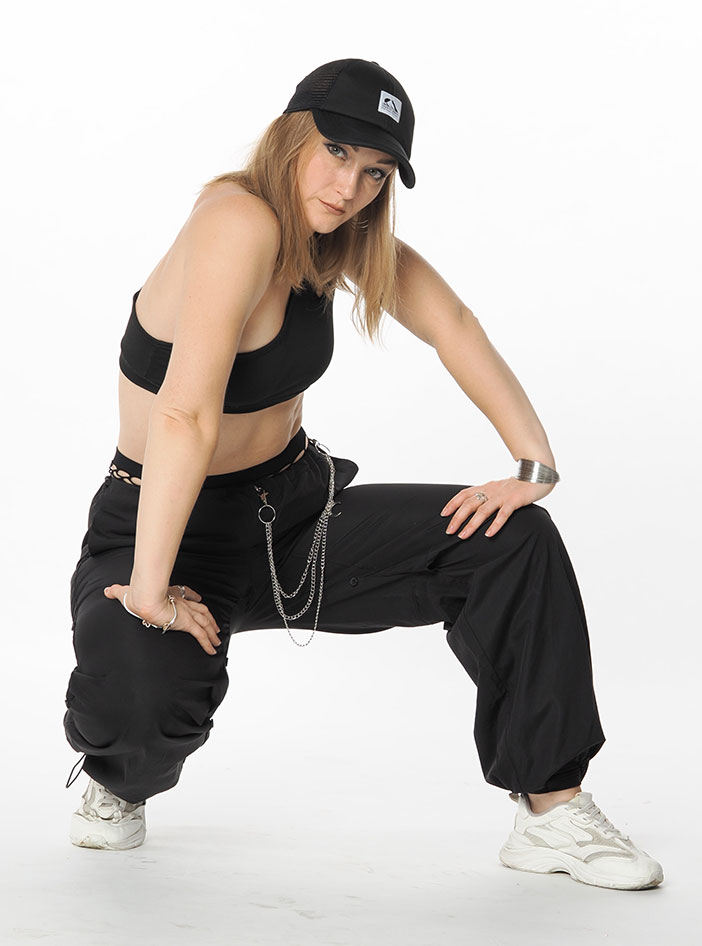
In dance, Reggaeton is strongly based on rhythm, body control, and personal expression. The movements emphasize hips, torso isolations, and grounded steps that follow the beat of the music. One of the most well-known movements is perreo, a hip-driven motion inspired by dancehall traditions. The name comes from the Spanish word perro (“dog”), referring to the low, grounded posture of the movement. Perreo is closely connected to the rhythm of the dembow beat and represents the playful, expressive, and sometimes provocative nature.
Alongside perreo, Reggaeton dance also includes a wide range of movements such as body rolls, hip accents, footwork variations, and dynamic upper-body isolations. These elements allow dancers to interpret the rhythm in their own way and combine technical control with expressive freedom.
Although Reggaeton began in the Caribbean, it quickly spread throughout Latin America and later across Europe and the rest of the world. Today it is one of the most globally recognized Latin music genres. Artists such as Daddy Yankee, Don Omar, Bad Bunny, Karol G, and J Balvin have helped bring the sound to international audiences.
Like many urban styles, Reggaeton continues to evolve. New artists, producers, and dancers constantly influence how the music sounds and how the dance is performed. What began as a street-based cultural expression has become a global movement that continues to shape music, dance, and popular culture.